
Contact us
For 24/7 customer assistance or if new business enquiries, contact us at the below.
+8469532302
enquiries@terrasafe.co.za
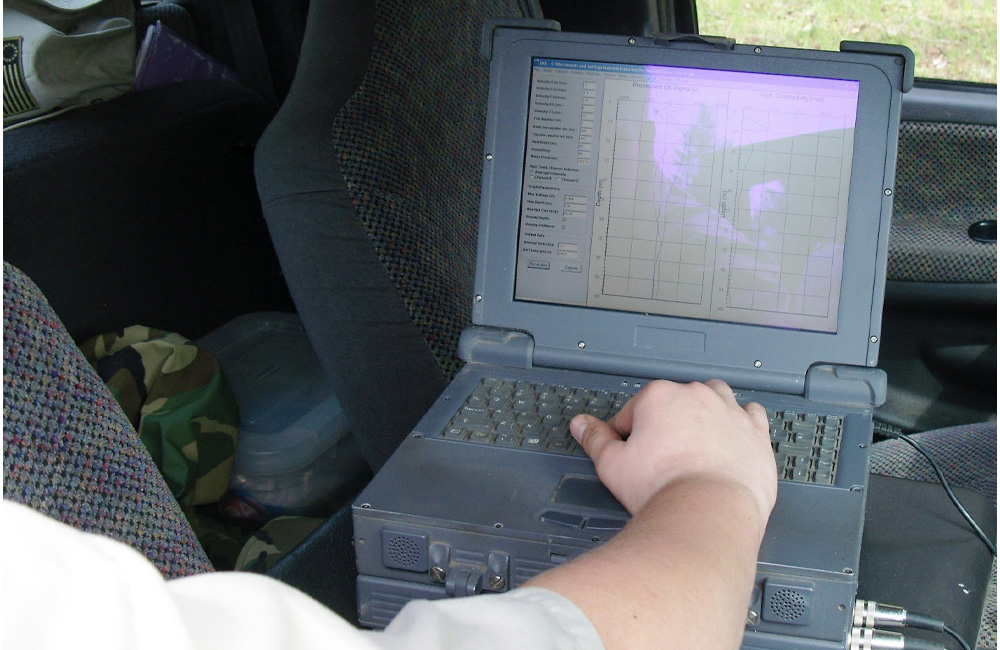
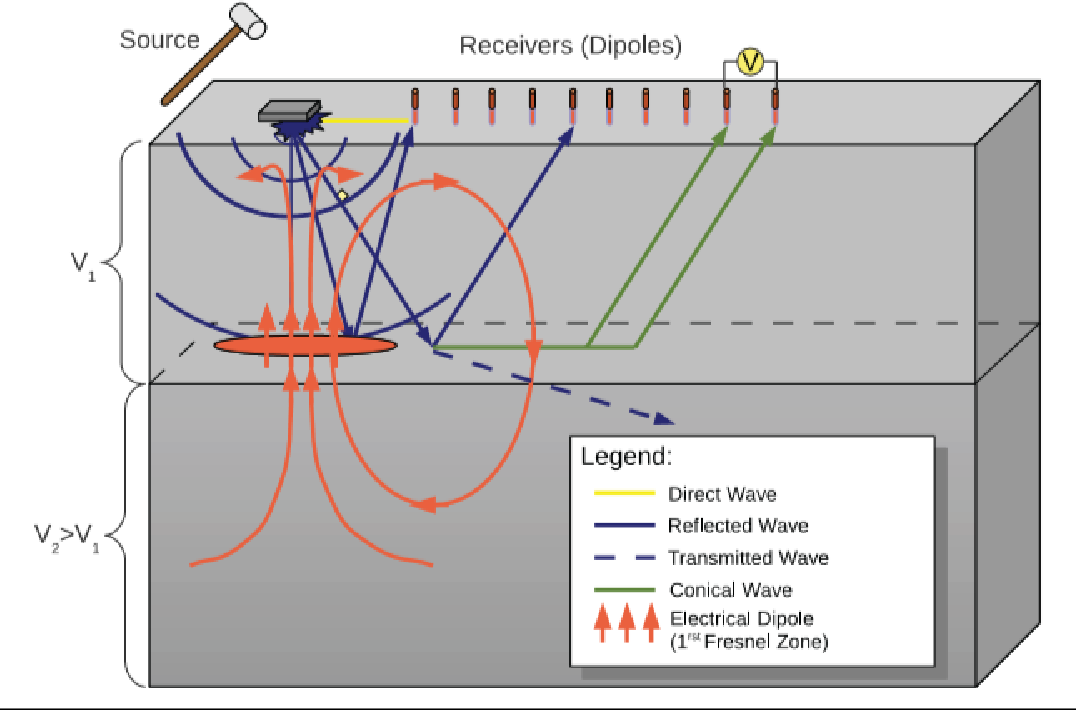
TerraSafe’s advancements in ESEE technology offer significant commercial advantages, including reduced environmental impact, cost efficiency, improved data accuracy, and enhanced regulatory compliance. Ecologically, ESEE technology contributes to habitat preservation, carbon emission reduction, wildlife protection, and water resource conservation, achieved through ongoing research, technology refinement, field testing, and stakeholder engagement efforts. By prioritizing the development and deployment of environmentally friendly exploration technologies, TerraSafe demonstrates its commitment to sustainable resource exploration practices and ecological stewardship.
Our Approach to Eco-friendly Seismoelectric
Through continuous experimentation, optimisation, and innovation, our engineers and scientists refine ESEE technology to push the boundaries of subsurface imaging and advance the state-of-the-art in exploration geophysics.
Optimising Sensor Configurations
Researchers experiment with different sensor configurations to maximize the sensitivity and coverage of the ESEE system. This may involve varying the spacing and orientation of sensors to achieve optimal signal detection and imaging resolution.
Signal Processing Algorithms
Advanced signal processing algorithms are developed and fine-tuned to extract meaningful information from raw data collected by ESEE sensors. These algorithms filter out noise, enhance signal clarity, and improve the overall quality of subsurface imaging.
Integration of New Technologies
Researchers explore the integration of new technologies, such as artificial intelligence and machine learning, to enhance ESEE imaging capabilities. These technologies enable automated data analysis, pattern recognition, and predictive modeling, further improving the accuracy and reliability of subsurface imaging.
Field trials play a crucial role in validating the performance of ESEE technology in real-world exploration scenarios. Our trials are conducted in diverse geological settings and environmental conditions to assess the technology’s effectiveness and reliability.
Why use ESEE
Eco-Friendly Seismoelectric Exploration technology offers a promising solution to the ecological challenges posed by traditional seismic exploration methods. By prioritising environmental stewardship and sustainability, our ESEE technology delivers a range of ecological benefits that are instrumental in safeguarding natural habitats, reducing carbon emissions, mitigating wildlife disturbance, and protecting water resources. Our ESEE technology represents a significant advancement in exploration geophysics, aligning with the global imperative to balance resource development with ecological preservation.
Reduced Environmental Impact
Traditional seismic exploration methods often involve the use of explosive charges or heavy machinery, which can disturb natural habitats and wildlife. ESEE technology offers a non-invasive alternative, minimizing disturbance to ecosystems and reducing the need for extensive land clearing or disruption.
Cost Efficiency
ESEE technology can lead to cost savings compared to traditional seismic methods. By eliminating the need for explosive charges and heavy equipment, companies can reduce operational expenses associated with equipment rental, transportation, and regulatory compliance.
Improved Data Accuracy
ESEE technology utilizes advanced seismoelectric conversion principles to provide high-resolution imaging of subsurface formations. This results in more accurate and detailed data compared to conventional seismic surveys, allowing for better-informed decision-making in exploration and drilling activities.
Enhanced Regulatory Compliance
The non-invasive nature of ESEE technology may streamline regulatory approval processes for exploration projects. By demonstrating a commitment to environmentally friendly exploration methods, companies can potentially expedite permitting and approval processes, reducing project timelines and associated costs.
How ESEE lessens the ecological impact
Preservation of Natural Habitats: ESEE technology minimizes disturbance to natural habitats and ecosystems by avoiding the use of explosive charges or heavy machinery. This helps protect sensitive environments, including forests, wetlands, and wildlife habitats, from the adverse effects of traditional seismic exploration activities.
Reduced Carbon Emissions: By eliminating the need for explosive charges and reducing reliance on heavy machinery, ESEE technology helps lower the carbon footprint associated with seismic exploration operations. This contributes to overall carbon emission reduction efforts and supports companies’ sustainability goals.
Mitigation of Wildlife Disturbance: Traditional seismic exploration methods can disrupt wildlife behavior and habitat connectivity, leading to negative impacts on biodiversity. ESEE technology reduces these disturbances, allowing wildlife populations to remain undisturbed and minimizing the risk of habitat fragmentation and species displacement.
Protection of Water Resources: Conventional seismic exploration methods may pose risks to water resources through contamination from drilling fluids or surface runoff. ESEE technology reduces these risks by minimizing surface disturbance and avoiding the use of hazardous materials, thus safeguarding water quality and aquatic ecosystems.